Back
Back
Care Stopped Being an Event: Digital Twins and the Shift to Continuous Longevity Care
Dr. Neil Panchal
Co-founder and Chief Medical Officer
Share:
The annual physical is one of medicine’s most enduring rituals and one of its strangest. We make a decision about a person’s health for an entire year based on a single morning of data, then send them home and hope nothing important happens in the eleven months we are not watching. In emergency medicine I saw the cost of those eleven months arrive all at once, often in the form of a problem that had been building quietly the whole time. Preventive medicine exists to catch those problems long before they reach the ER.
The problem with the annual physical
A once-a-year snapshot was never quite enough to do that job. Health does not change on an annual schedule. It drifts continuously, in small movements that a single visit cannot see. The ritual persists because, until recently, a yearly data point was the most a clinic could realistically gather and act on. That constraint is now lifting.
What a biological digital twin actually is
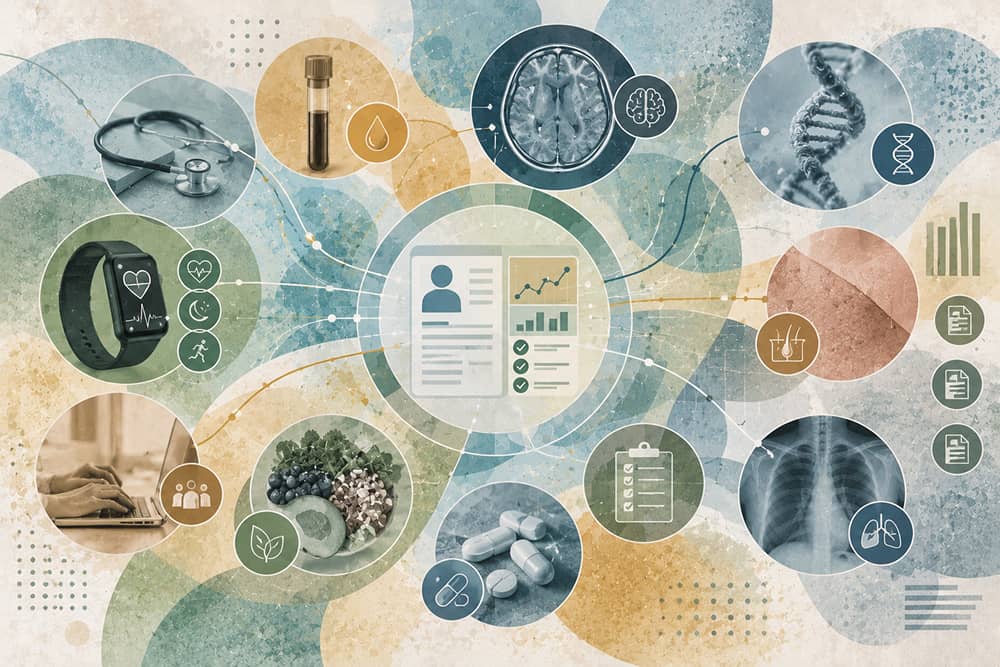
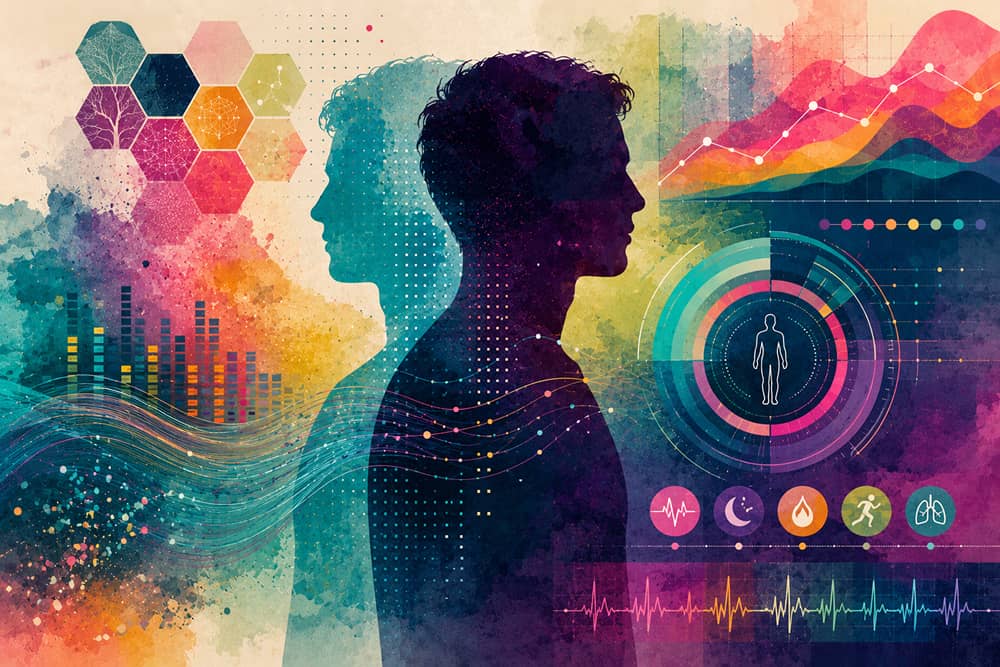
What is changing is that the gaps between visits are starting to fill in. The combination of continuous data from wearables and what people are calling the biological digital twin is turning care from an event into a process. A digital twin is a living model of a patient, updated in real time from wearables, labs, and clinical history, which lets a clinical team see a trajectory rather than a single point. Health systems and longevity practices are actively piloting this approach, building continuous, personalized models aimed at extending healthspan rather than only reacting to disease once it appears.
The agentic layer that watches between visits
Sitting on top of that continuous data is a new layer of agentic systems, software that does not just display a number but watches the stream and flags what deserves a human’s attention. A resting heart rate trending the wrong way over three weeks. A glucose pattern that is starting to drift. Sleep that has quietly degraded. These are the early signals an annual visit cannot see, because they live in the spaces between appointments. The promise of this technology is simple to state. Notice sooner, act earlier, intervene while the problem is still small and still cheap to solve.
The boundary: continuous monitoring, not continuous anxiety
I want to be clear-eyed about the boundaries here, because continuous monitoring done badly is just continuous anxiety. The goal is not to alert a patient about every fluctuation in their data, and it is certainly not to let software make clinical decisions on its own. The goal is to surface the patterns that matter to a clinician, who then decides what to do about them. The technology earns its place by being quiet most of the time and right when it finally speaks. A system that cries wolf simply trains everyone around it to stop listening.
Why this is an operational shift for clinics
For a clinic, this is a real operational shift, not just a new gadget on the shelf. Moving from episodic to continuous care means someone, or something, has to be responsible for the data flowing in every day, not only on visit days. Done manually, that is impossible. No clinician can personally watch hundreds of patients’ data streams and still run a practice. This is precisely the work that infrastructure has to carry, with the technology handling the watching and the clinician handling the deciding. That division of labor is the whole game.
Part of the work the platform has to do is deciding which signals are trustworthy enough to act on — consumer devices produce a great deal of data, but not all of it is clinically useful, and the infrastructure has to know the difference.
Making that practical is what we set out to do. A continuous model of a patient is only useful to a clinic when the data behind it is unified, current, and trustworthy, and when the signals that matter actually reach the physician at the right moment. We built our platform to carry that continuous load. It pulls data together as it arrives, holds the longitudinal picture, and surfaces what warrants a clinical eye without burying the team in noise. The clinician stays firmly at the center.
What patients gain from continuous care
It is worth naming what patients get out of this, because it is considerable. Continuous care changes the relationship from a yearly inspection into something closer to a partnership. A patient knows their trajectory is being watched by people and tools they trust, and that a meaningful change will prompt a conversation rather than waiting for the calendar. That steadiness is reassuring in the best sense. It replaces the quiet worry of the eleven unwatched months with the confidence that someone is paying attention.
This is the version of preventive medicine I wanted to see when I left the emergency department. Not a once-a-year verdict, but an ongoing relationship with a patient’s health, where the trajectory is visible and the small course corrections happen in time to matter. The practices that prepare their data foundation now will be able to offer something the annual physical never could. Care that is genuinely paying attention.
Frequently asked questions
What is a biological digital twin?
A biological digital twin is a continuously updated, data-driven model of an individual patient. It draws on wearables, labs, and clinical history to represent a person’s evolving physiology, allowing a care team to see trajectory and trends rather than a single snapshot from one visit.
What is agentic AI in healthcare?
Agentic AI refers to software that actively monitors a patient’s incoming data, applies clinical logic to distinguish signal from noise, and flags patterns that warrant a clinician’s attention — rather than passively displaying numbers. In preventive care, it watches signals such as heart rate, glucose, and sleep between visits and surfaces meaningful changes to a clinician for review.
Does continuous monitoring replace the doctor?
No. The technology handles the watching; the clinician handles the deciding. Continuous monitoring and agentic systems are designed to surface the patterns that matter so a physician can act earlier. Clinical judgment, interpretation, and the patient relationship remain firmly human.
What does a clinic need to offer continuous care?
It needs infrastructure that unifies incoming data in real time, maintains a trustworthy longitudinal record, and routes important signals to the right clinician without flooding the team with noise. Without that foundation, continuous data becomes an unmanageable firehose rather than a usable picture of patient health.