Back
Back
After the Sync: Turning Wearable Data Into Care

Effie Arditi
Co-Founder & CEO
Share:
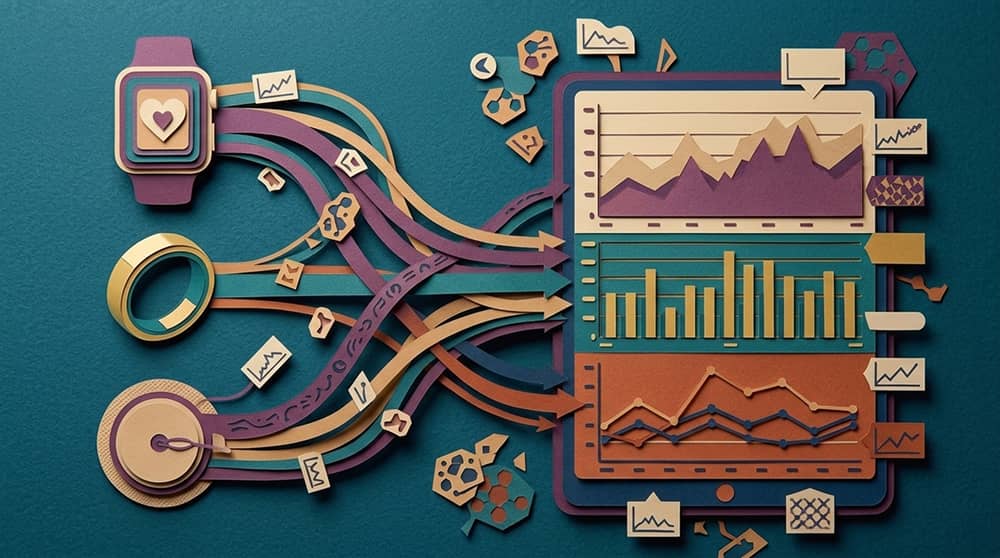
There is one question longevity physicians now field constantly, and it almost always started with a patient. Someone pulls up two years of data from the ring, strap, or watch on their body and asks the reasonable thing: “You can use this, right?”
The instinct is to answer by sorting devices into lanes: the ring for sleep, the watch for activity, the strap for recovery. It is a tidy story, and it is wrong. Most of these devices now measure the same things, so the device a patient chose is rarely the interesting part. What matters for wearables for longevity clinics is what happens after the data arrives: whether a practice can connect that stream to the rest of the clinical picture and turn it into medical insight a physician can act on. That capability, not the brand on the wrist, is the whole game.
Two things this guide will not do. It will not re-argue why raw device data needs a physician’s read rather than a consumer chatbot’s, we made that case in Your Apple Watch Data Needs a Doctor. And it will not cover connecting these streams to your EHR and labs, which we detail in How Clinics Integrate EHR, Labs, and Wearables for Preventive Care.
Most wearables now measure the same core signals
Look past the marketing and the sensor suites have converged. A modern smartwatch (Apple Watch, Samsung Galaxy Watch, Google Pixel Watch, Garmin, Fitbit), a smart ring (Oura, Ultrahuman, Samsung Galaxy Ring), and a recovery strap (WHOOP) will nearly all capture the same core set:
➡️ Resting and continuous heart rate
➡️ Heart rate variability
➡️ Sleep duration and sleep stages
➡️ Activity, steps, and workout intensity
➡️ Skin temperature trends and, on most, blood oxygen
That overlap is why a strict “this device tracks that metric” taxonomy falls apart. A ring does not own sleep. A watch does not own activity. They collect the same signals through the same underlying method, optical photoplethysmography, and increasingly report the same derived scores. If your patient asks which device tracks their recovery, the honest answer is: most of them do.
So if the metrics are largely the same, what separates one device from another? Three things, and none of them is the feature list.
What differs: accuracy for the same signal
The same metric is not equally trustworthy across devices, and this is where independent validation matters more than spec sheets.
For heart rate variability, a validation study measuring nocturnal HRV against ECG across 536 nights found agreement ranging from near-perfect for the Oura ring to moderate for WHOOP and poor for Garmin (validation of nocturnal HRV in consumer wearables). Part of that gap is anatomical: finger-worn sensors sit over richer vasculature than the wrist, which can yield a cleaner optical signal.
Sleep staging tells a similar story. Across polysomnography comparisons, every consumer device estimates total sleep reasonably well but struggles to classify individual stages, and rankings shift depending on the study and who funded it (six-device sleep and HRV validation; Fitbit, Garmin, and WHOOP versus polysomnography). The research consensus is to treat stage data as a general pattern, not a precise measurement. Even head-to-head comparisons are fragile, because results depend heavily on test conditions (contextual equivalence in wearable comparisons).
The clinical takeaway is not “rank the devices and prescribe the winner.” It is that consumer wearable data is trend data. The direction of a metric over weeks is informative. Any single night’s absolute value carries a margin of error a physician should respect.
What differs: form factor and wear compliance
The best data comes from the device a patient actually keeps on. Here the differences are real and practical.
➡️ Rings (Oura and peers) are unobtrusive and often worn most consistently, which makes their overnight trends dependable. Many patients forget they have them on.
➡️ Straps (WHOOP) have no screen to check and are built for around-the-clock wear, producing dense, continuous signals well suited to spotting drift.
➡️ Smartwatches are the most common device your patients already own, which makes them the widest on-ramp, but they come off to charge and are worn less consistently overnight.
Compliance is not a footnote. A less accurate device worn every night can yield a more useful trend line than a more accurate device worn three nights a week. For a preventive practice, the device that fits the patient’s life is usually the one worth reading.
What differs: a few genuinely distinct capabilities
Beyond the shared optical core, a handful of capabilities really do divide the field, because they use different sensing entirely:
➡️ ECG and rhythm. Smartwatches with electrical sensors can record a single-lead ECG and surface irregular-rhythm signals, something optical-only rings and straps do not do the same way.
➡️ Continuous glucose. Continuous glucose monitors (Dexcom, Abbott Lingo and Libre, Ultrahuman M1) measure interstitial glucose through a skin sensor, a completely different modality. A CGM reveals postprandial response and glycemic variability that no wrist or ring device captures, which makes it one of the most clinically distinct wearables in metabolic care.
➡️ Blood pressure and body composition. Connected home devices (Withings and Omron cuffs, smart scales) capture home blood pressure trends and weight or body composition, the periodic vitals that anchor a longevity workup and that wrist optics cannot provide.
These are the honest dividing lines. Not “sleep versus activity,” but ECG, glucose, and blood pressure, capabilities defined by their sensor, not their branding.
From wearable data to medical insight
Everything so far leads to one point: the value is not in collecting wearable data. It is in connecting it. A declining overnight HRV is a number. What makes it clinical is the context around it, the patient’s labs, their history, their medications, and the goals their physician set.
This is the work Longevitix is built to do. The platform brings wearable trends into the same view as the rest of the record, then surfaces the patterns worth a physician’s attention.
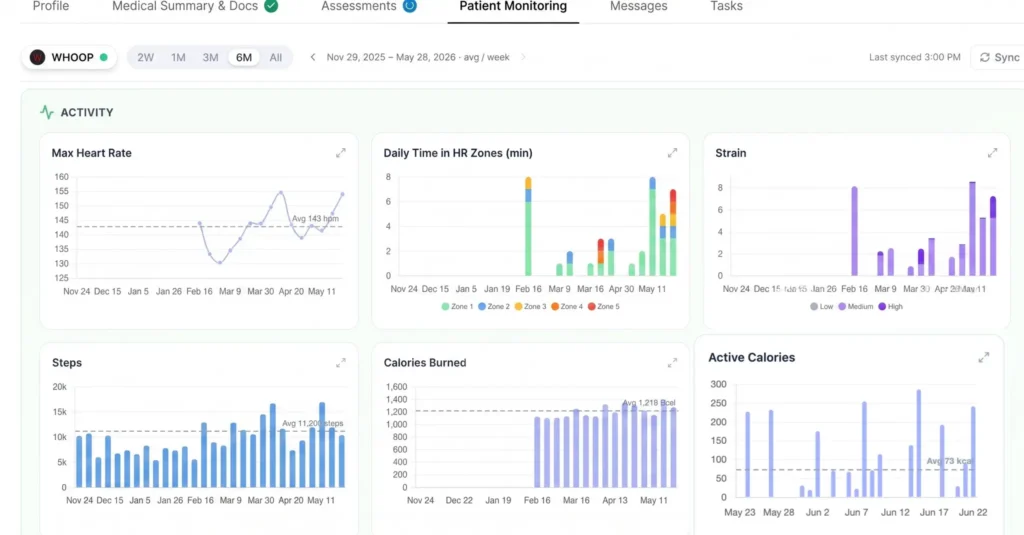
➡️ It puts wearable trends next to the clinical picture. Heart rate, HRV, sleep, activity, and glucose sit alongside labs, history, and the care plan, so a trend is read in context rather than in a separate consumer app.
➡️ It surfaces where signals converge. When an HRV decline lines up with a rising resting heart rate, worsening sleep, and a relevant lab shift, the platform flags that the signals are moving together, so the physician sees a pattern instead of six disconnected readouts.
➡️ It grounds what it shows in evidence. What the platform surfaces is drawn from curated clinical sources the physician can check, not an opaque score.
➡️ It keeps the physician in the loop. The platform surfaces trends, patterns, and gaps and flags them for review. The physician interprets and makes every clinical decision.
That is what turns a wall of consumer metrics into decision support. The device gathers the signal. The connection to the medical record is what gives the signal meaning. And because consumer data is trend data, meaningful findings are read as patterns over time and confirmed against validated or in-clinic measures before they drive a decision.
This is also why device breadth matters less than it seems. Whichever wearable a patient wears, the job is the same: bring the stream into the clinical picture and surface what deserves a closer look. The brand is interchangeable. The insight is not.
Closing the loop with the patient
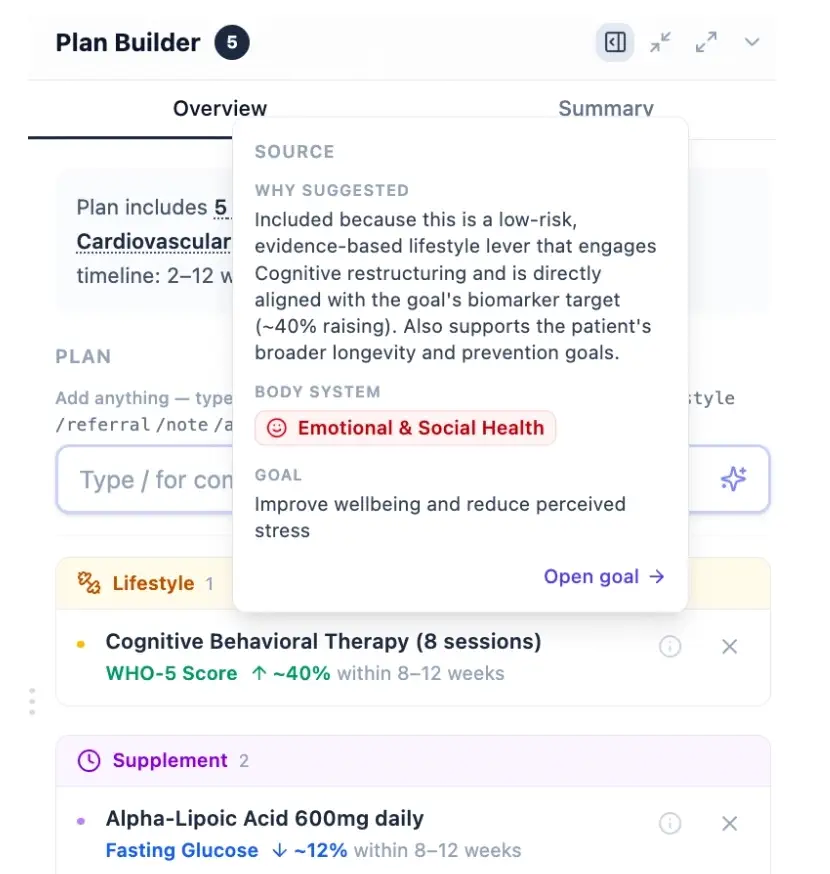
Reading the data is half of it. The other half is what goes back to the patient, and this is where wearables stop being a dashboard and start changing outcomes. The same streams that inform the physician keep the patient engaged with their plan between visits. That shows up in three ways.
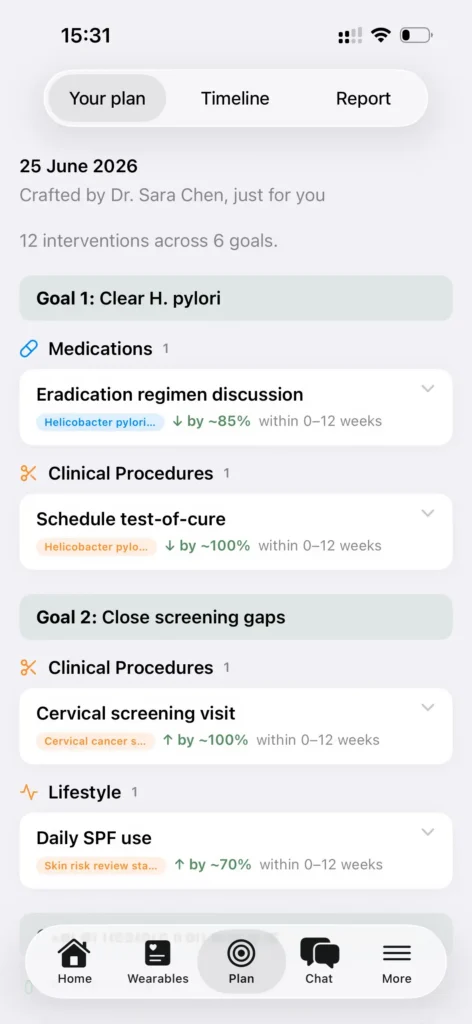
When the plan needs adjusting. A plan is a starting hypothesis, and wearable trends are how you learn whether it is working. If a patient’s recovery and resting heart rate drift the wrong way a few weeks into a new training block, the physician can ease the Zone 2 target at the next review rather than push through it, and the updated plan appears in the patient’s app the moment it changes. If a sleep intervention has not moved a month of ring data, the clinician can swap it for a different approach. The patient does not wait for a handout at the next appointment. They see the adjusted plan, and the reasoning, as soon as it is made.
When the patient is on track. Behavior change survives on reinforcement, and wearables make consistency visible in real time. A patient who hits their step target most days, holds a steady bedtime, or logs their supplements can be acknowledged for it while the streak is happening, not months later. That timely encouragement of the things going right is often what keeps a patient with a plan long enough for it to work. Seeing their own trend line move in the right direction, next to the goal their clinician set, closes the gap between effort and payoff.
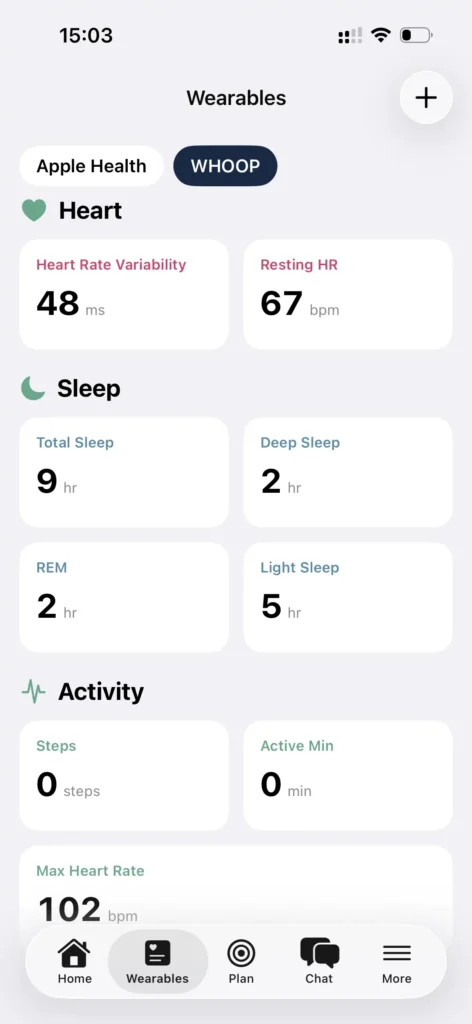
When something drifts. Wearables are also an early-warning layer, used carefully. When a lifestyle pattern slips, a bedtime creeping later week over week, activity falling off, a course of medication going unlogged, the app can nudge the patient while there is still time to correct. And when a signal looks clinically meaningful, it does not sit in an app waiting for the next visit. It is flagged to the care team, and a clinician decides whether and how to reach out. The nudge keeps the patient consistent. The clinical judgment stays with the physician. The patient is never left to interpret a worrying trend alone, and never told something is wrong by an algorithm acting on its own.
Together, this is what a patient is really asking for when they hold up their wearable. Not a prettier chart. A practice paying attention between the visits: adjusting when the data calls for it, encouraging the work that is going well, and reaching out when it matters.
Key takeaways
➡️ Wrist, ring, and strap wearables have largely converged on the same core metrics, so device-by-metric categories are misleading
➡️ What actually differs is accuracy for a given signal, form factor and wear compliance, and a few distinct capabilities (ECG, continuous glucose, blood pressure)
➡️ The value is not collecting wearable data; it is connecting it to labs, history, and the care plan to produce medical insight
➡️ Longevitix surfaces wearable trends in clinical context and flags converging patterns; the physician interprets and decides
➡️ Closing the loop means adjusting the plan when trends call for it, reinforcing consistency, and flagging drift to the care team
FAQs
Do different wearables track different things?
Less than you would expect. Smartwatches, rings, and straps mostly capture the same core metrics: heart rate, HRV, sleep, activity, temperature, and blood oxygen. The real differences are accuracy, wear compliance, and a few distinct capabilities like ECG, continuous glucose, and blood pressure.
Which wearable is most accurate?
It depends on the metric and the study. Validation research has found finger-worn devices like Oura performing well for overnight HRV and heart rate, while sleep staging is limited across all devices. Consumer data is best used as a trend rather than a precise value.
Which wearables should a longevity clinic support?
All of the major types, because patients arrive on different devices: smartwatches (Apple Watch, Samsung, Garmin, Fitbit), straps (WHOOP), rings (Oura and peers), continuous glucose monitors (Dexcom, Abbott), and home devices like blood pressure cuffs and smart scales.
How does Longevitix turn wearable data into medical insight?
It brings wearable trends into the same view as the patient’s labs, history, and plan, surfaces where signals move together, and grounds what it shows in curated clinical evidence. The platform flags patterns for review, and the physician interprets and decides.
How do patients stay engaged between visits?
Their wearable trends and care plan live in one app. The plan updates when the physician adjusts it, consistency gets reinforced, and meaningful changes are flagged to the care team for follow-up.